Explore The NRA Universe Of Websites

APPEARS IN News

Time to Stop BATFE Abuses: Congress Pursues Firearm Law Reforms

Thursday, March 13, 2008

Special Report

by Chris W. Cox
NRA-ILA Executive Director

Time To Stop BATFE Abuses:
Congress Pursues Firearm Law Reforms

Since we last reported on our drive to reform federal firearm laws (“BATFE Hearings Lead to Reform Bills,” June 2006), concern about treatment of firearm dealers by the Bureau of Alcohol, Tobacco, Firearms and Explosives (BATFE) continues to rage. In response, members of the U.S. House of Representatives--with NRA-ILA’s full support--have begun to push for new and improved reform legislation.

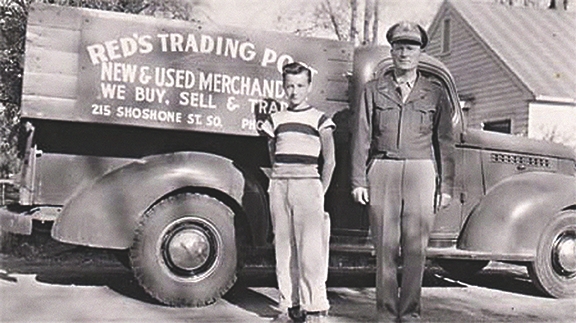
Red’s Trading Post founder, Lowell “Red” Kinney (below, right) stands with his son, Jesse. Like many family-owned gun stores, Red’s now fights to save its federal firearms license from revocation by overzealous BATFE officials.

The bill, H.R. 4900, was introduced in January by Reps. Steve King (R-Iowa) and Zack Space (D-Ohio). It’s mainly aimed at one problem: Around the country, gun stores small and large have been threatened with closure over minor, unintentional record-keeping violations.

Among them--and certainly the most outspoken, through owner Ryan Horsley’s widely read blog on the Internet--is Red’s Trading Post in Twin Falls, Idaho. Red’s has been a family business since 1936, which makes it Idaho’s oldest gun store. After giving Red’s a clean bill of health in a 2001 inspection, BATFE found record-keeping errors in 2005, and began proceedings to revoke Red’s federal firearms license (FFL) in 2006.

Due to increasing concern over BATFE’s treatment of firearm dealers, members of the U.S. House of Representatives are pressing for reform legislation such as H.R. 4900, introduced by Rep. Steve King, R-Iowa, and Rep. Zack Space, D-Ohio.

When Red’s challenged BATFE in court, the agency forcefully defended its decision, even though the federal judge hearing the case noted that some of the alleged violations were “double counted” and that “the amount and nature of the alleged violations, taken in comparison with Red’s total annual sales, does not raise a serious concern to public safety.” (Red’s case is still pending, with a trial expected this year.)

Red’s is not alone. BATFE is also pursuing revocation against a pair of stores in North Carolina, even though its own correspondence with the stores’ owner commended him for making “a concerted effort to comply with the laws and regulations,” and the alleged violations involved a tiny percentage of overall sales--with, for example, recordkeeping violations claimed on 80 firearms out of 16,000 sold. That case, too, will require an expensive trial to resolve.

Since an FFL can only be revoked for “willful” violations, most of these cases turn on BATFE’s definition of the term “willful.” Congress added the “willfulness” requirement in the Firearms Owners’ Protection Act (FOPA) of 1986, to end similar abuses by the agency throughout the 1970s and early ‘80s. BATFE has gotten around that change by arguing in court--all too successfully--that a violation is “willful” any time a dealer repeats a mistake after a warning. And it’s easy for BATFE to rack up large counts of “violations” when they include errors like not recording the buyer’s county of residence--even where the buyer’s city and county have the same name and boundaries.

H.R. 4900 would end that problem by defining “willful” violations to mean intentional, purposeful violations of the law. It would also streamline the appeal process to give dealers a better chance to defend themselves in court.

What H.R. 4900 Would Do

H.R. 4900 is a combined and expanded version of two bills (H.R. 5005 and H.R. 5092) from the last Congress. Here are some of its provisions:

  • Clarifies the standard for “willful” violations--allowing penalties for intentional, purposeful violations of the law, but not for simple paperwork mistakes.
  • Codifies limits on disclosure of firearm trace data--which Congress has already limited through a series of appropriations riders over the past three years, out of concern for gun owners’ privacy and the confidentiality of law enforcement records. The provision would still allow law enforcement agencies full access to trace data for bona fide criminal investigations.
  • Reforms the procedures for FFL applications. Under H.R. 4900, denial of an application will require notification to the applicant, complete with reasons for the denial. An applicant will be allowed to provide supplemental information and to have a hearing on the application.
  • Permanently bans creation of a centralized electronic index of dealers’ records--a threat to gun owners’ privacy that Congress has barred through appropriations riders for a decade.
  • Eliminates a provision of the Youth Handgun Safety Act that requires those under 18 to have written permission to use a handgun for lawful purposes (such as competitive shooting or safety training)--even when the parent or guardian is present.
  • Prevents disclosure of information in FFL records outside of law enforcement agencies.
  • Allows a grace period for people taking over an existing firearm business to correct problems in the business’s records. If a person inherits a family gun store, for example, the new owner shouldn’t be punished for the previous owner’s mistakes.
  • Cleans up federal law by repealing the Brady Act’s “interim” waiting period provisions, which expired in 1998.
  • Improves the process for imposing penalties, especially by letting FFLs appeal BATFE penalties to a neutral administrative law judge, rather than to a BATFE official.
  • Allows a licensee time to dispose of his firearm inventory when going out of business.
  • Requires BATFE to establish clear investigative guidelines.
  • Clarifies the licensing requirement for gunsmiths, to distinguish between repair and other gunsmith work and actual manufacturing.
  • Gives BATFE sole responsibility for receiving reports of multiple handgun sales. (Currently, dealers also have to report multiple sales to state or local agencies, a requirement that has shown little or no law enforcement value.)
  • Restores a policy that allowed importation of barrels, frames and receivers from non-importable firearms, when they can be used as repair or replacement parts.

There have been other new twists in the attack on FFLs. BATFE agents continue to tell gunsmiths around the country they must be licensed as “manufacturers,” even though the Gun Control Act clearly states that common gunsmithing tasks such as “repairing firearms or … making or fitting special barrels, stocks, or trigger mechanisms to firearms” may be performed on a dealer’s license. Gunsmiths have even been told that engraving or rebluing a firearm is “manufacturing.” NRA-ILA and the NRA Civil Rights Defense Fund are supporting one gunsmith’s challenge to these BATFE claims.

Even more bizarre, some BATFE officials have told gunsmiths that if they become manufacturers, they’ll then have to register with the State Department as manufacturers of “defense articles,” subject to a $1,750 registration fee. (The State Department’s paperwork for that process is so arcane that it rejects nearly 50% of registration requests.)

H.R. 4900 would fix this problem, too, by clarifying the definition of “manufacturer” and “dealer” to make clear, once and for all, that gunsmithing isn’t manufacturing.

Gun owners are rightly concerned that the ongoing problems with BATFE will continue to drive FFLs out of business. No FFLs would mean nowhere for you and me to buy guns.

That would be just fine with the Violence Policy Center, the radical gun-ban group that for years complained there were “more gun dealers than gas stations in the U.S.” As pointless as that comparison was both then and now, VPC hasn’t been satisfied with the fact that it’s no longer true nationally.

Call the U.S. House today at (202) 224-3121 and ask your representative to cosponsor H.R. 4900.
Instead, VPC has turned to arguing that there are still more gun dealers than gas stations in five states. Not that those states--largely rural, low-crime Alaska, Idaho, Montana, Oregon and Wyoming--should worry anyone. In 1968, Congress deliberately made it easy to obtain FFLs to ensure continued firearm supplies in remote areas. VPC mentions that “Alaska has more than three times as many gun dealers as gas stations;” that shouldn’t be surprising since Alaska also has immense areas with no towns or roads at all.

As restrictive as current laws and BATFE practices have been for dealers, VPC says they’re not enough and demands new limits. Among VPC’s ideas are that guns should only be sold from “businesses devoted primarily to the sale of firearms” (there goes the gun department at your local Cabela’s or Wal-Mart), and that BATFE should be able to inspect dealers “at least” four times a year. H.R. 4900, of course, would go the opposite direction from VPC’s ideas.

I’ve personally committed myself to winning these reforms. This winter, I wrote to BATFE Acting Director Michael Sullivan to state my concern about his agency’s “overly restrictive legal interpretations and overly zealous enforcement activities.” Among other things, I pointed out that BATFE demands a higher level of perfection in dealers’ records than it practices (according to several audits) in its own National Firearms Registration and Transfer Record--the government’s database of machine guns and other devices regulated under the National Firearms Act.

I went on to promise Acting Director Sullivan that NRA would continue to push for a legislative fix to the problems we’ve encountered with his agency. That’s what we did with the Firearms Owners’ Protection Act of 1986. That bill took an eight-year battle in Congress, including the use of a discharge petition--a procedural maneuver to yank a bill from the grip of a hostile committee chairman. These petitions rarely succeed, so passage of FOPA was truly a history-making event for NRA and the Congress alike.

As we did 20 years ago, NRA-ILA will explore every angle to bring about these needed reforms. But now, as then, the key to our ultimate success will be the dedication and commitment of NRA members who call and write the Congress, and who turn out to campaign for candidates who support our Second Amendment rights.

Call the U.S. House today at (202) 224-3121 and ask your representative to cosponsor H.R. 4900. For more information, including NRA-ILA’s letter to Acting Director Sullivan, click here.

TRENDING NOW
HOA Firearm Clash Augurs a Broader Legal Debate

News  

Monday, June 1, 2026

HOA Firearm Clash Augurs a Broader Legal Debate

The fight to defend Second Amendment rights is not confined to Washington, D.C., or even to the halls of state capitals.

Virginia’s Semiauto Ban Hits Snag With County Enforcement Officials

News  

Monday, June 1, 2026

Virginia’s Semiauto Ban Hits Snag With County Enforcement Officials

While Virginia’s bans on “assault firearms” and magazines capable of holding more than 15 rounds was signed into law on May 14, and is scheduled to go into effect on July 1, it remains to be seen ...

New York:  Gov. Kathy Hochul Signs Gun Ban in State Budget Process

Wednesday, May 27, 2026

New York: Gov. Kathy Hochul Signs Gun Ban in State Budget Process

On Wednesday, May 27, Gov. Kathy Hochul signed S.9005C, which “enacts into law major components” of the state’s public protection and general government budget.

Florida Attorney General, Law Enforcement Commissioner, and State Attorneys Agree Florida’s Waiting Period Law Violates the Second Amendment in NRA Challenge

Friday, June 5, 2026

Florida Attorney General, Law Enforcement Commissioner, and State Attorneys Agree Florida’s Waiting Period Law Violates the Second Amendment in NRA Challenge

Today, the parties in the National Rifle Association’s challenge to Florida’s firearm waiting period law jointly filed an Offer of Judgment asking the U.S. District Court for the Middle District of Florida to declare the ...

Pennsylvania: House Majority Democrats Pushing More Gun Control Next Week

Saturday, June 6, 2026

Pennsylvania: House Majority Democrats Pushing More Gun Control Next Week

On Monday, June 8, the House Judiciary Committee will hear a bill that will force Keystone gun owners to keep their guns under lock and key or face the consequences. 

NRA Files Lawsuit Challenging Maryland’s Glock Ban

Wednesday, May 27, 2026

NRA Files Lawsuit Challenging Maryland’s Glock Ban

The National Rifle Association, Firearms Policy Coalition, and Second Amendment Foundation filed a lawsuit yesterday challenging Maryland’s ban on Glock and Glock-style handguns.

Yet Another Tragic Example of the False Promise of Red Flag Laws

News  

Thursday, May 28, 2026

Yet Another Tragic Example of the False Promise of Red Flag Laws

We’ve consistently highlighted the defects of “red flag” laws, the chief of which is the underlying philosophy that compelling removal of a person’s own firearms is a sufficient resolution of any risk or threat of harm.

NRA Files Lawsuit Challenging Post Office Carry Ban

Tuesday, May 26, 2026

NRA Files Lawsuit Challenging Post Office Carry Ban

The National Rifle Association, Gun Owners of America, Gun Owners Foundation, and three NRA members today filed a lawsuit challenging the federal prohibition on carrying firearms at United States Post Offices.

Report Provides Context on “Machinegun-Convertible Pistol” Panic

News  

Monday, June 8, 2026

Report Provides Context on “Machinegun-Convertible Pistol” Panic

Anti-gun lawmakers and their gun control allies exploit menacing language to bolster their arguments against lawful arms: ordinary semi-automatic rifles and pistols become “weapons of war” and “assault weapons;” “large capacity magazines” actually refers to ...

Virginia: Circuit Court Injunction Halts Private Sale Background Checks in Virginia

Thursday, June 4, 2026

Virginia: Circuit Court Injunction Halts Private Sale Background Checks in Virginia

Yesterday, June 3rd, following a hearing on an earlier injunction and final order from the Lynchburg Circuit Court, the Virginia State Police posted a notice that private sale background checks were no longer required or ...

MORE TRENDING +
LESS TRENDING -

More Like This From Around The NRA

NRA ILA

Established in 1975, the Institute for Legislative Action (ILA) is the "lobbying" arm of the National Rifle Association of America. ILA is responsible for preserving the right of all law-abiding individuals in the legislative, political, and legal arenas, to purchase, possess and use firearms for legitimate purposes as guaranteed by the Second Amendment to the U.S. Constitution.